
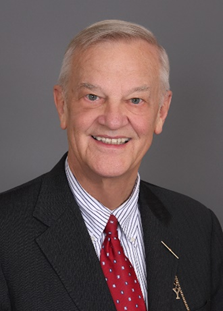
Peter Barton Hutt recently passed away, in September 2026. If you need to contact his family, please contact his son Peter Hutt II at pbhutt2@gmail.com.
Until then, Peter was a Retired Partner in Residence in the Washington, DC law firm of Covington & Burling LLP. At the time he passed away, he provided the following information about his then-current activities and background.
************
Peter Barton Hutt is a Retired Partner in Residence in the Washington, DC law firm of Covington & Burling LLP. Although he is retired, he continues to be available at his Covington office five days each week working on the history of his tenure as Chief Counsel of the Food and Drug Administration during 1971-1975. He currently serves on Boards of Directors, Advisory Committees, and related groups, to pursue academic opportunities, to serve as an expert witness, and to engage broadly on FDA matters. He began his law practice with the firm in 1960 and, except for his four years in the government, continued at the Firm until his retirement in October 2024.
Peter Barton Hutt is a Retired Partner in Residence in the Washington, DC law firm of Covington & Burling LLP. Although he is retired, he continues to be available at his Covington office five days each week working on the history of his tenure as Chief Counsel of the Food and Drug Administration during 1971-1975. He currently serves on Boards of Directors, Advisory Committees, and related groups, to pursue academic opportunities, to serve as an expert witness, and to engage broadly on FDA matters. He began his law practice with the firm in 1960 and, except for his four years in the government, continued at the Firm until his retirement in October 2024.
From 1971 to 1975 Mr. Hutt was Chief Counsel for the Food and Drug Administration. During his tenure as FDA Chief Counsel, Mr. Hutt led the transformation of the agency from outdated law enforcement to modern administrative law. He initially reinterpreted the informal rulemaking authority in the Federal Food, Drug, and Cosmetic Act of 1938 to authorize legally binding substantive regulations in compliance with the Administrative Procedure Act of 1946. Using that newfound authority, he promulgated regulations to implement the review of GRAS food ingredients, to require nutrition labeling for half the food supply, to redefine "imitation" food, to establish the emergency permit controls for low acid canned food, and to modernize food standards; to implement the prescription drug requirements of the Drug Amendments of 1962 following a sweeping victory in four Supreme Court cases, to create the OTC Drug Review for nonprescription drugs, and to establish the doctrine that a physician may lawfully prescribe an FDA-approved drug for an unapproved (off-label) use; to create a process for reevaluating the safety and effectiveness of all biological products that had been licensed since 1902; to rationalize the application of the Delaney Anticancer Clause to animal drugs through the sensitivity-of-the-method doctrine; to require ingredient labeling for cosmetics and premarket safety substantiation for all cosmetic ingredients; and both to establish the regulatory policy for medical devices under the 1938 Act and to incorporate that policy into the legislation that became the Medical Device Amendments of 1976. He created the requirement of preambles for all proposed and final FDA regulations, initiated the use of guidelines (now called guidance) to establish informal FDA policy, established the use of regulatory letters (now called warning letters) as an inexpensive and efficient compliance approach, and persuaded the Solicitor General to defend the stringent FDA criminal enforcement policy before the Supreme Court in United States v. Park. Just before leaving FDA, he wrote the comprehensive proposed procedural regulations that govern all FDA administrative action to this day. As a result of all this work he has been called the Father of Modern Food and Drug Law.
Since 1994, he has taught a full course on Food and Drug Law during Winter Term at Harvard Law School. Harvard Law School held a symposium on January 17, 2013, "Celebrating Peter Barton Hutt's 20 Years (thus far) at HLS”. He taught the same course at Stanford Law School during Spring Term in 1998. He is the lead co-author of Food and Drug Law: Cases and Materials (Foundation Press, 1st edition 1980, 2d edition 1991, 3d edition 2007, 4th edition 2014, 5th edition 2022) and has published more than 175 book chapters and articles on Food and Drug Law and on health policy. He is a member of the Editorial Advisory Board of the Food and Drug Law Journal. Mr. Hutt has extensive experience working on FDA legislation. Before joining FDA, he worked on the Drug Amendments of 1962, the Controlled Substances Act of 1970, and the Poison Prevention Packaging Act of 1970. While at FDA he was responsible for the legislation that became the Drug Listing Act of 1972, the Consumer Product Safety Act of 1972, and the Medical Device Amendments of 1976. Since 1976, he has participated in the drafting of major legislation amending the Federal Food, Drug, and Cosmetic Act. Representing the Pharmaceutical Research and Manufacturers of America (then called the Pharmaceutical Manufacturers Association), Mr. Hutt testified before Congress and worked with congressional staff on the Drug Regulation Reform Act of 1978, the Orphan Drug Act of 1983, and the Drug Price Competition and Patent Term Restoration Act of 1984, and he worked with congressional staff on the Drug Export Amendments Act of 1986, the Nutrition Labeling and Education Act of 1990, the Dietary Supplement Health and Education Act of 1994, and the Export Reform and Enhancement Act of 1998. At the request of the House and Senate staff, he drafted and worked on the Food and Drug Administration Modernization Act of 1997. He has continued to work on FDA-related legislation since then, including the Prescription Drug User Fee Act of 1992 and the subsequent PDUFA laws. Most recently, he worked on the 21st Century Cures Act of 2016. He has testified before the House and Senate more than 100 times either as counsel accompanying a witness or as a witness.
Mr. Hutt has been a member of the National Academy of Medicine (formerly called the Institute of Medicine (IOM)) of the National Academies of Science, Engineering, and Medicine (NASEM) since the IOM was formed in 1971. He has served on the IOM Executive Committee and other NAS and IOM committees, and on eight NASEM report review committees. He served as a member of the Working Group on the Innovation in Drug Development and Evaluation for President Obama's Council of Advisors on Science and Technology (PCAST). He served on the NIH Advisory Committee to Review the Guidelines for Recombinant DNA Research, the National Committee to Review Current Procedures for Approval of New Drugs for Cancer and AIDS established by the President’s Cancer Panel and the Science Review Subcommittee of the FDA Science Board to review the FDA science needs in order to perform its regulatory mission, and published a major analysis that resulted in Congress doubling FDA appropriations during 2008-2013. He also served on the Panel on the Administrative Restructuring of the National Institutes of Health and on the Working Group to Review Regulatory Activities Within the Division of AIDS of the National Institute of Allergy and Infectious Diseases. He is a member of the MIT Visiting Committee for Sponsored Research, and a past member of the Board of the AERAS Global TB Vaccine Foundation, the Foundation for Biomedical Research, and the California Life Sciences Association (formerly called the California Healthcare Institute). He has served on a wide variety of other academic and scientific Advisory Boards.
He has advised and represented the national trade associations for the food, prescription drug, nonprescription drug, dietary supplement, and cosmetic industries, and both large and small companies spanning the entire scope of FDA’s jurisdiction. He has served on the Advisory Board for leading venture capital firms (e.g., Polaris Partners, Kearny Venture Partners, Frazier Healthcare Partners, New Leaf Venture Partners, Sprout Group) and on the Board of Directors for more than 35 healthcare biotechnology companies (e.g., American Sterilizer, Parexel, Cell Genesys, IDEC Pharmaceuticals, Vivus, Phase Forward, CV Therapeutics, Momenta Pharmaceuticals, Ista Pharmaceuticals, Xoma, LifeLine Screening, Concert Pharmaceuticals, Living Proof, YourBio (formerly Seventh Sense), DBV Technologies, Selecta Biosciences, Moderna Therapeutics, Seres Therapeutics, Axcella Health, Rubius Therapeutics, Evelo Biosciences, Kaleido Biosciences, Pendulum (formerly Whole Biome), Immunomedics, CoLabs International, and Holoclara). Mr. Hutt has also been a member of several biotechnology company advisory boards.
Mr. Hutt is a member of the Board of Directors of the Critical Path Institute (a public-private partnership between FDA and the pharmaceutical industry to develop surrogate endpoints for drug trials to expedite the approval of new drugs), and has served on the IOM Roundtable for the Development of Drugs and Vaccines Against AIDS, the Advisory Committee to the Director of the National Institutes of Health, the NAS Committee on Research Training in the Biomedical and Behavioral Sciences, the NIH Advisory Committee to Review the Guidelines for Recombinant DNA Research, the National Committee to Review Current Procedures for Approval of New Drugs for Cancer and AIDS established by the President's Cancer Panel of the National Cancer Institute at the request of President Bush, the Keck Graduate Institute of Applied Life Sciences (one of the Claremont Colleges), and five Office of Technology Assessment advisory panels. He was a member of the New Foods Panel of the White House Conference on Food, Nutrition and Health and authored the panel report. He has twice been a councilor of the Society for Risk Analysis and has served as Legal Counsel to the Society as well as the American College of Toxicology.
He was twice asked to become the Deputy Assistant Secretary for Health: in the Department of Health, Education, and Welfare in 1973 by Assistant Secretary Charles C. Edwards and in the Department of Health and Human Services in 1986 by Assistant Secretary Robert E. Windom. He declined both offers. In 2001, Mr. Hutt's name was informally forwarded by the Bush Administration to Senator Edward Kennedy, then the Chair of the Senate HELP Committee, for consideration as the Commissioner of Food and Drugs. Senator Kennedy blocked the nomination by refusing to hold a confirmation hearing, on the ground that he would never hold a hearing for that position for anyone who has advised and represented the regulated industry. In 2005, following Mark McClellan's and Lester Crawford's tenures as FDA Commissioner, Mr. Hutt's name was again informally discussed for consideration as the Commissioner of Food and Drugs. Senator Kennedy was no longer Chair of the HELP Committee but he again succeeded in blocking any potential nomination by threatening an all-out opposition for the same reason. Mr. Hutt was also under consideration as FDA Commissioner by the first Trump Administration. He was one of the three final candidates, but he was not selected.
During the 1960s, Mr. Hutt litigated pro bono cases on behalf of homeless alcoholics and drug addicts. He co-argued the only alcoholism case ever heard in the United States Supreme Court, Powell v. Texas, and then drafted the legislation that created the National Institute of Alcohol Abuse and Alcoholism and the National Institute of Drug Abuse. Based on this work, two-thirds of the States have repealed their statutes that had made public intoxication a criminal offense.
He was named by The Washingtonian magazine as one of Washington's 50 best lawyers (out of more than 40,000) and as one of Washington's 100 most influential people; by the National Law Journal as one the 40 best health care lawyers in the United States; and by Global Counsel as the best FDA regulatory specialist in Washington, DC. Business Week referred to Mr. Hutt in June 2003 as the "unofficial dean of Washington food and drug lawyers." In naming Mr. Hutt in September 2005 as one of the eleven best food and drug lawyers, the Legal Times also referred to him as "the dean of the food-and-drug bar." In April 2005, Mr. Hutt was presented the Distinguished Alumni Award by FDA. In May 2005, he was given the Lifetime Achievement Award for research advocacy by the Foundation for Biomedical Research, and in 2016 he was made a member of the LMG Life Sciences Hall of Fame. The 2017 Who's Who Legal: Life Sciences described Mr. Hutt as "the best guy in the business" and the 2017 Chambers USA called him "a legend." In 1994, he was elected a Fellow of the Society for Risk Analysis. In 2016 he was elected a Fellow of the Institute of Food Technologists and a member of Phi Tau Sigma, the Honor Society for Food Science and Technology.
In January 2013, the Dean of Harvard Law School chaired a symposium in his honor. The Wall Street Journal printed a profile of Mr. Hutt on the front page of the April 26, 2024 edition. The American Bar Association Journal also printed his profile December 12, 2024. The Exeter Bulletin for Summer 2024 contained his profile as well.
Create Your Own Website With Webador